











* Automatic self-cleaning filter     * Filtro de limpieza automática     * Otomatik geri yıkamalı filtre
SFH SPT PFH TWIN TRIPLET OPTIMIST KATAMARAN

operation

movie

* Movies are wmv files.
Los vídeos son archivos wmv
Filmler wmv dosyasıdır


Operating Principles

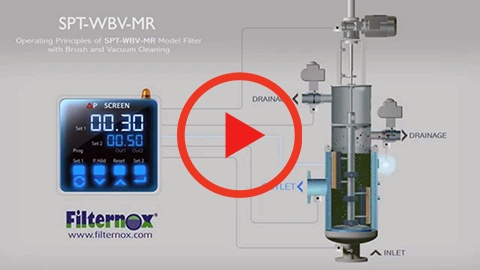
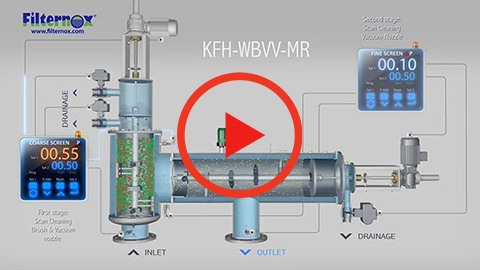
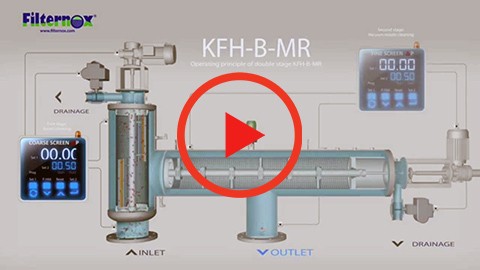
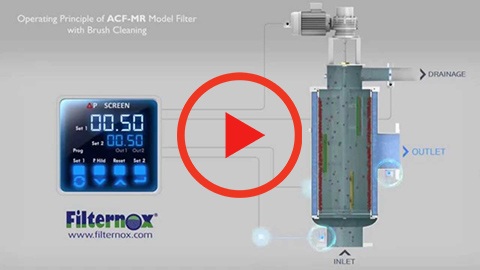
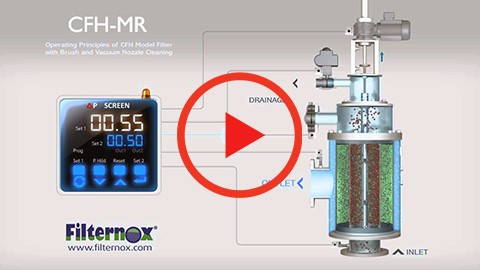
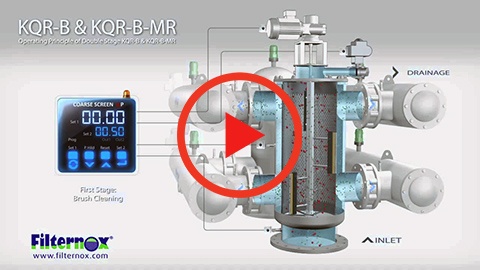
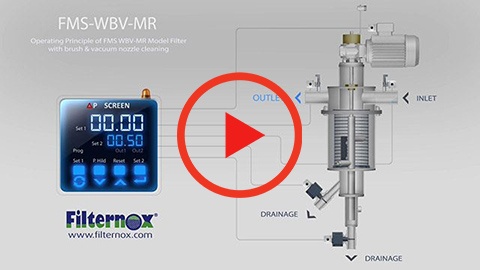
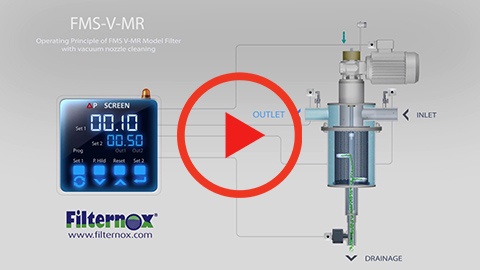
As the water enters into filter inlet (1), it is pre-filtered through the coarse screen (3) to prevent the large particles ingress that will damage fine filter and internal parts. Then water flows into the second filtration section that contains multi-layered fine screen (4). This screen is protected by a robust coarse mesh that also provides a pre-filtration. While water passes through the fine screen towards outlet (2) the particles within the water accumulates on the inside surface of the fine screen and produce a dirt layer. As the dirt layer builds up on the screen, it will cause a pressure loss on the downstream side of the screen. The dirt layer itself will act as a filter and collect much smaller particles than the stainless screen. When the pressure differential reaches a certain level a back-flush should be started to clean fine screen. At a preset value (0.5 bar), back-flush control unit (12) opens cleaning discharge valve (9) and a strong back-flush flow that goes off to the atmosphere via drainage pipe (11) occurs. That flow creates suction effect in front of the nozzles (6) and sweeps the dirt collected on the fine screen. The dirty water sucked from the fine screen surface flows through collector pipe (7) and hydraulic turbine (8) and impels a rotary movement of the dirt collector while going off the drainage pipe. At the same time pressure drop in the hydraulic turbine (5) and drainage of piston (10) forces the dirt collector into axial movement. This turning and axial movements together create a helical movement that enables the suction nozzles sweep the entire screen area. When back-flushing is completed, dirt collector automatically back-flushes, returns to its original position and back-flushing is completed. During back-flushing, filtration continues.


Principios generales de operación

El agua entra en el filtro a través de la entrada (1) y se prefiltra mediante la malla gruesa (3) para prevenir el acceso de las partículas más grandes que pueden dañar la malla fina y las partes internas. Posteriormente el agua fluye a través de la segunda sección de filtración que contiene la malla fina multicapa (4) Esta malla está protegida mediante una robusta malla gruesa que también desarrolla una prefiltración. Conforme el agua pasa a través de la malla fina hacia la salida (2), los sólidos se acumulan en la superficie interna de la malla fina creando una capa de suciedad. Esta capa de suciedad en sí actuará como un filtro recogiendo partículas mucho más pequeñas que la malla fina. La capa de suciedad aumenta en la malla y cuando es lo suficientemente gruesa para causar cierto valor de diferencial de presión, comienza el ciclo de lavado. Al alcanzar un valor preestablecido, la unidad de control del retrolavado (12) abre la válvula de descarga del lavado (9) y se produce una fuerte corriente de contralavado que sale a la atmósfera a través de la tubería de drenaje (11). Esta corriente crea un efecto de succión frente a las boquillas (6) y arrastra la suciedad recogida en la malla fina. El agua sucia absorbida de la superficie de la malla fina fluye a través de la tubería de colección (7) y de la turbina hidráulica 8 e impulsa un movimiento rotatorio del colector de suciedad mientras sale por la tubería de drenaje. Al mismo tiempo, el descenso de la presión en la turbina hidráulica (5) y el drenaje del pistón fuerzan al colector de suciedad a realizar un movimiento axial. Estos movimientos de rotación y axial juntos crean un movimiento helicoidal que permite que las boquillas de succión realicen un barrido por todo el área de la malla. Cuando se completa el retrolavado, se ejecuta automáticamente un segundo ciclo de lavado que empuja el colector a su posición original y con ello el filtro queda preparado para el siguiente ciclo de lavado. El ciclo combinado de lavado dura entre (10) y 60 segundos, dependiendo del modelo. Durante el retrolavado el proceso de filtración no se interrumpe.

Çalışma Prensibi

Filtre girişinden (1) giren su, içinde bulunan büyük partiküllerin ince filtreye ve iç parçalara zarar vermesinin önlenmesi için kaba ızgarada (3) bir ön filtrasyona tabi tutulur. Su buradan çok katmanlı ince filtrenin (4) yer aldığı ikinci filtrasyon kısmına geçer. İnce filtre eleği, aynı zamanda bir ön filtrasyon sağlayan kaba aralıklı ve sağlam bir elek tarafından korunur. İnce filtre üzerinden çıkışa (2) doğru geçen su içindeki partiküller filtrenin iç yüzeyinde toplanarak bir kirlilik tabakası oluştururlar. Filtre üzerinde bir basınç farkı yaratan bu tabaka aynı zamanda mevcut ince filtreden daha ince bir filtrasyon da sağlar. Bu basınç farkı önceden tespit edilmiş bir seviyeye ulaştığında ince filtrenin temizlenmesi için bir geri yıkama başlatılmalıdır. Önceden ayarlanmış değerde (0.5 bar), geri yıkama kontrol ünitesi (12) yıkama deşarj vanasını (9) açar ve deşarj borusundan (11) atmosfere çıkan güçlü bir geri yıkama akışı oluşur. Bu akış nozül (6) açıklıkları önünde emme etkisi yaratarak ince filtre üzerinde birikmiş kiri emer. İnce filtre üzerinden emilen kirli su temizleme kolektör borusu (7) ve hidrolik türbinden (8) geçerek drenaj borusundan çıkarken temizleme kolektörünü döndürür. Türbin bölmesinde (5) ve piston (10) drenajında oluşan basınç düşüşü temizleme kolektörüne eksenel bir hareket verir. Bu dönme ve eksenel hareketin birlikte oluşturduğu sarmal ilerleme emme nozüllerinin tüm ince filtre yüzeyini taramasını sağlar. Bu işlem sonlandığında, temizleme kolektörü otomatik olarak ikinci bir geri yıkama işlemi yaparak eski konumuna geri döner ve geri yıkama süreci tamamlanır. Geri yıkama sırasında filtrasyon işlemi kesintisiz devam eder. maksimum 30 saniye geri yıkama sürecinin ardından filtre bir sonraki basınç farkı sinyaline kadar hazır olarak bekler.


movie Note: If you have a Windows PC, you already have Windows Media Player (available free for Windows or Mac at the Microsoft site); Windows Media Player will play the Windows Media (*.wmv filename) movies. If you have a Mac, you already have QuickTime Player (available free for Windows or Mac at the Apple site); QuickTime Player will play the QuickTime (*.mov filename) movies. wmv
wmv